Ronny Massey loved drawing up plays, even in a courtroom. And the colors of his rivals made him see red.
By JIMMY WIGFIELD
Ronny Massey’s inspiration to stay ahead of the opposition knew no boundaries of time or location.
That included a courtroom.
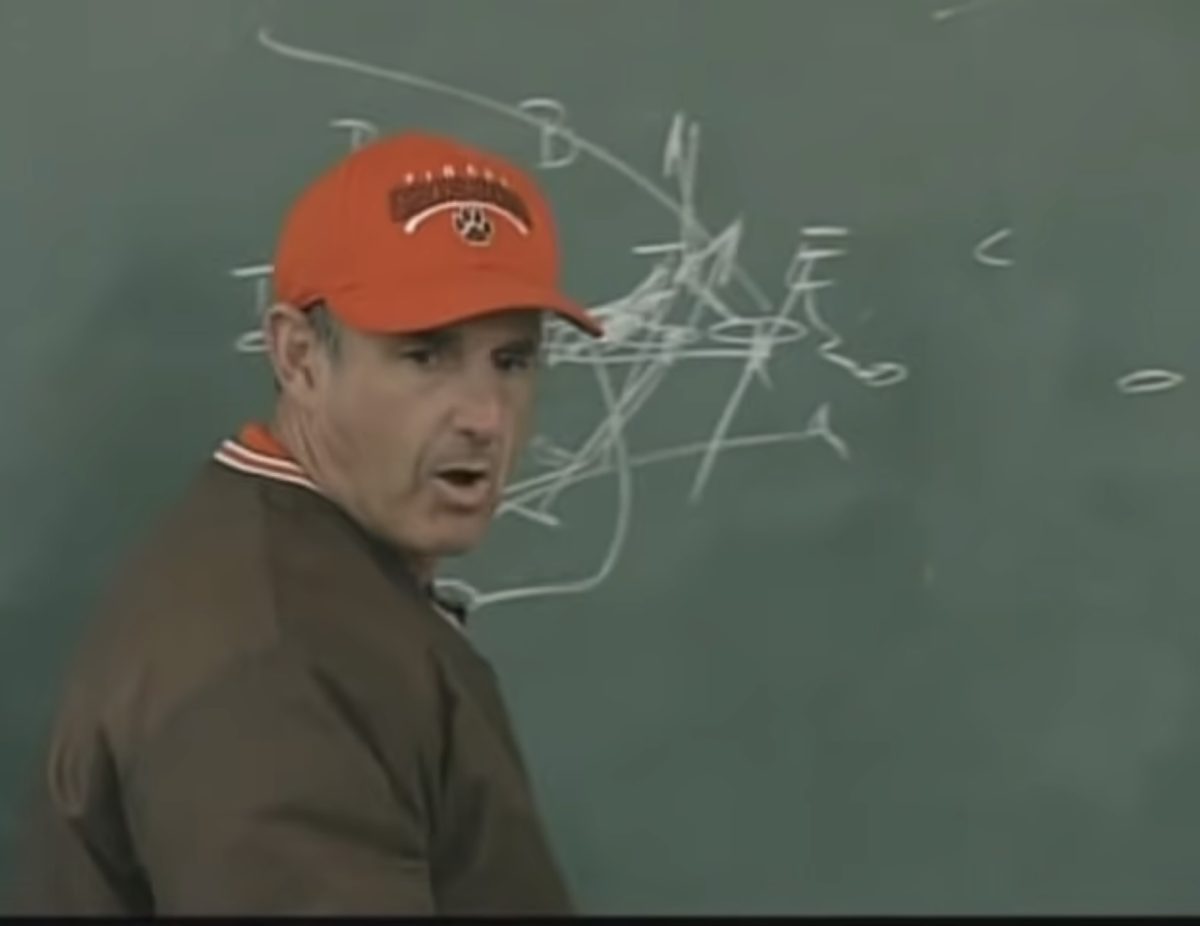
During Massey’s years at Citronelle, there was an altercation on the sideline during a football game instigated by someone who wasn’t on the coaching staff. The Mobile County School System filed charges and Massey and assistant coach Rotch Dungan attended the hearing.
Dungan intently listened to the accused getting a legal dressing down; Massey was more interested in getting first downs.
“Seems like we had been tinkering with how to block a new screen play,” Dungan said. “I’m locked in, listening to what was being said, and Ronny’s over there with his notepad drawing up plays and asking me, ‘Can we do this? What do you think?’”
Leroy coach Jason Massey, who is Ronny Massey’s nephew, said his uncle believed any time was a good time to develop strategy.
“I grew up listening to him and my dad,” he said. “At some point and time at any family function, they’d be sitting at a table drawing up X’s and O’s on a napkin and talking football. He always tried to learn new stuff. One summer, I helped him at a camp at Auburn. Other coaches would go out after the camp and have a good time. I remember we’d go into the Auburn coaches’ office and watch game tape to learn something new that would win football games.”
Game planning went on literally until the team got off the bus on road trips, former Citronelle All-State quarterback and Saraland coach Jeff Kelly recalled.
“When we played on the road, the quarterback sat beside him on the bus,” Kelly said. “He’d go through the game plan. He had a lot of reminders for me and helped me understand when he called a play what he was wanting to do with it.”
The presence of Kelly, a gifted passer, illuminated the ability of Massey, a former wishbone quarterback, to shift from a run-based offense. That major conveyance was aided by Massey’s relationship with Florida State coach Bobby Bowden and defensive coordinator Mickey Andrews, Massey’s college coach at Livingston.
Through Andrews, Massey got the keys to the library of FSU’s passing game when Heisman Trophy winner Charlie Ward quarterbacked the Seminoles to the 1993 national championship.
“He was on the cutting edge of offense,” Kelly said. “He’d go visit their camp and come back with some four-wide schemes. That was a pretty big deal. He was ahead of his time a little bit. He had a great system.”
Dungan, who coached the offensive line at Citronelle and now at Saraland, also had to adjust.
“Ronny wanted the offensive linemen to be physical and aggressive, nothing fancy — just get after folks,” he said. “We weren’t going to finesse anybody. We wanted to knock you around and bully you a little. Until Jeff came around, we didn’t throw much, so coach had me go up and work with (offensive line) coach (Rick) Trickett at Auburn to find ways to protect Jeff because we had never pass protected anything.”
Massey didn’t have to seek new ways to take care of his coaches and players.
“He was fiercely protective,” Kelly said. “You always knew coach had your back.”
Jason Massey wasn’t thinking of becoming a coach until his uncle got him to see the light in the early 1990s.
“I give him a lot of credit for getting me into the business,” Jason Massey said. “Mike Turk was recruiting for Troy and he came through Citronelle and my uncle told him about me. I was a student at Troy. He called me and I became a volunteer coach. I was planning on being an engineer and after helping for a year, I decided to change my major to education so I could coach.”
When Kelly got his first head coach’s job at Satsuma in 2004 — without first being an assistant coach — he leaned on Massey for advice.
“We all have people in coaching that we call to bounce ideas off of and for years coach Massey was that guy for me,” Kelly said. “Situations and damage control are always a part of the job. Becoming a head coach without being an assistant, I needed a mentor. I could always call him up and ask him whatever. In my early years, he was invaluable to me when something came up.”
When he died in 2010, Kelly turned to Massey’s wife, Helen “Ace” Massey.
“She knows more about football and dealing with teams than most men I know,” Kelly said. “We have always stayed in touch and she always reaches out to talk and check on all our family and our other coaches that have Citronelle ties. They have been like a second family to me and I don’t know if I would have lasted without their advice over the years.”
Dungan, a linebacker and offensive lineman in high school, learned how to coach from Massey.
Dungan interviewed to help with Citronelle’s freshman team and Massey asked him what he had coached.
“I told him I never had,” Dungan said. “He said, ‘If you can coach the offensive line, you’ll always have a job.’ I was just married, so that sounded good to me. Forty-one years later, it’s worked out.”
In his third year with the freshmen, the varsity offensive line coach quit and Dungan joined Massey on the varsity staff.
“I think my biggest contribution up to then was when he’d get mad and throw his hat on the ground, I’d pick it up and brush it off,” Dungan said.
Massey wore many hats as a coach and was far from acting as a chairman of the board.
“At some places, maybe an assistant coach runs the weight room,” Jason Massey said. “He felt the head coach should be present in everything the players were involved in. They needed that commitment from him if he was asking for that commitment from them.”
Citronelle had tenacious players who were accustomed to hard work off the field, a trait Massey related to and capitalized on.
“Our kids would come in to work out and they were covered in mud from logging all day,” Dungan said. “They weren’t going to work out any harder than that.”
As far as Massey was concerned, everyone was covered with mud and he had the same standards for them all, which bonded the team.
“He always had the same expectations of all the players, regardless if you were the starting quarterback or a sub or a young guy trying to figure out his way,” Kelly said. “Every guy felt part of the team and that they had a huge role. It was such a fun time.”
Relatives were measured the same as anybody else, as current Tulane coach Jon Sumrall, whose mother was a Massey, discovered when he played for the venerable coach at Grissom in Huntsville.
“He went above and beyond to see to it there was never any favoritism toward me,” Sumrall said. “He coached me harder than anybody. He came up with names for me. He called me ‘Precious.’ He’d say, ‘Hey Precious, come over here.’”
Once a player was in Massey’s realm, it was usually for life. Sumrall adopted many of Massey’s traits, including coaching constructively and an abhorrence for cursing players.
“He was extremely intense but a great teacher,” Sumrall said. “That is what I took away from him the most. He cared about being thorough and helping someone grasp something new. He still taught algebra when he coached us and most coaches try to get out of the classroom.”
Sumrall said his daily routine remains influenced by Massey.
“It is the teaching part, the way he cared about his players that was bigger than the game,” Sumrall said. “The game is a great teacher on how to handle adversity, to grow as a man, to sacrifice. Ronny used the game to create better people and I have carried that over to my career.”
Sumrall — who went on to sign with Kentucky and as a middle linebacker led the Wildcats in tackles as a senior — said Massey could get his players to perform beyond their limits.
“I’m probably a great example of that,” he said. “He had a way of instilling confidence and a belief and toughness in his players. I was an overachieving player, and I think he was too, and that resonated with who he became as a coach. He would challenge you to be at your best daily. He’d put you in a position to have success so you would believe in yourself. He did it every day. My freshman year, I was on the varsity, not because I was good but because we weren’t very good. We went 1-9. Coach Massey came in and a few years later we were 12-2. I’ll carry that with me forever. I wouldn’t be who I am and where I am without him.”