
Alabama lawmakers are out of their league and their minds
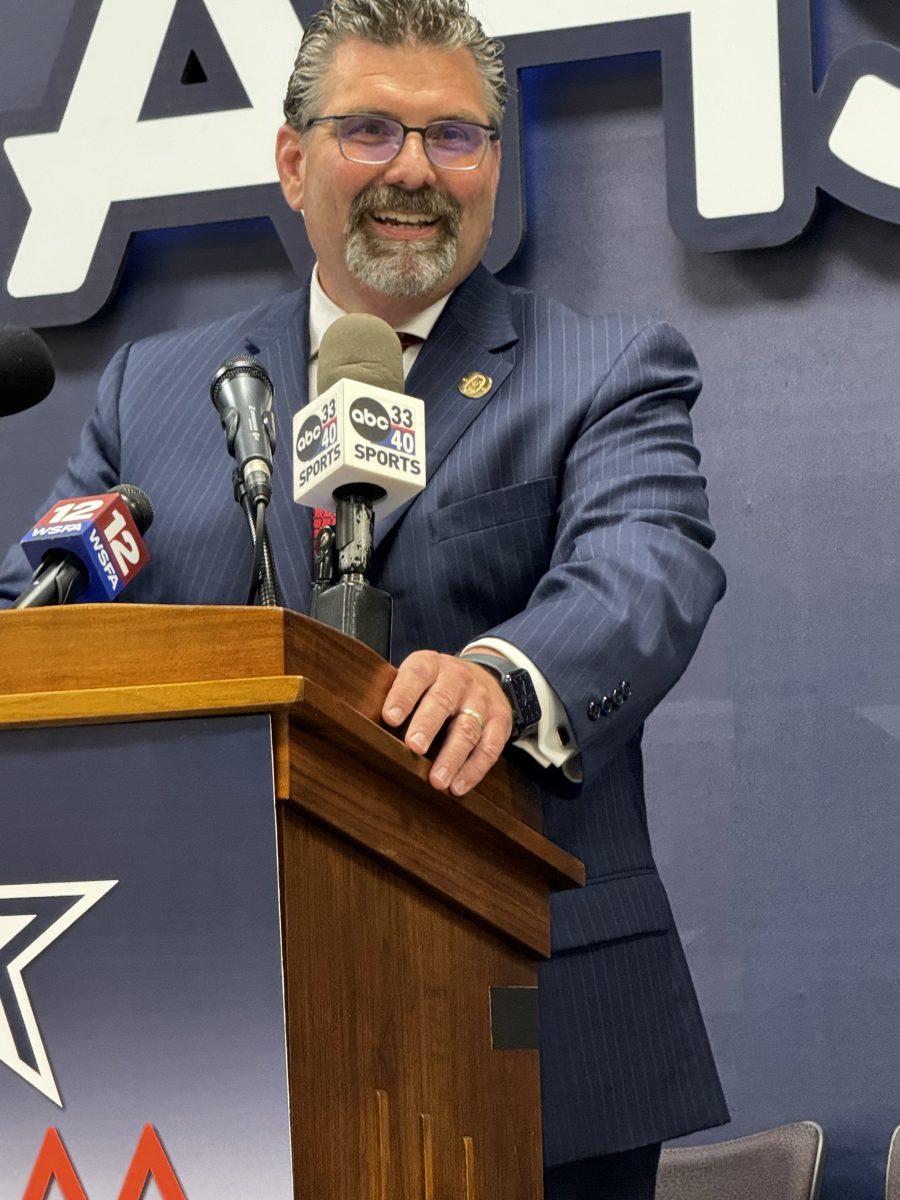
Alabama High School Athletic Association Executive Director Heath Harmon, as one would expect, finds plenty of fault with the state legislature trying to tell the organization how do do things. (Call News/Jimmy Wigfield)
____________________
If the bill is pushed again in 2026,
the Legislature should snuff it out
faster than a marijuana blunt
at a police roadblock.
____________________

It is a damning indictment of the Alabama Legislature that it refuses to let us vote on a state lottery, which will help public schools, yet wastes time pushing through a bill that would do little to ensure fairness in athletic competition, which it should not be involved in anyway.
The Alabama House of Representatives — pretending to be the champion of downtrodden schools while simultaneously playing the role of hard ass with immigrants — overwhelmingly passed a daft bill that would not count English Language Learners in determining where schools are classified by the Alabama High School Athletic Association. AHSAA guidelines make sure that Leroy competes against Millry, not Mary G. Montgomery.
Setting aside the fact the Legislature should not tell a private organization that does not accept taxpayer money how to operate, the House came up with a solution that won’t work to fix a problem that doesn’t exist.
Thankfully, time ran out in the 2025 regular session and the Senate didn’t get to consider the bill and Gov. Kay Ivey didn’t get to sign it. If the bill is pushed again in 2026, the Legislature should snuff it out faster than a marijuana blunt at a police roadblock.
Nothing but grandstanding
The bill was pure grandstanding. Why pick on only 5.5% of the students in the state who aren’t causing enough of a problem to worry about? Perhaps to give the appearance that immigrant students are being put in their place by not being counted. While I believe illegal immigrants should be deported, it is hypocritical and vacuous to say these ELL students shouldn’t be counted for athletic classifications yet are counted so schools can receive maximum funding. You can’t have it both ways.
This farce was started by a freshman politician with good intentions but it’s the first time I’ve heard failure in football or any sport blamed on students who are trying to learn to read, speak and write English.
House members voted 72-1 for it with 29 abstentions and whatever the reasons — ranging from genuinely thinking it would help their schools or a genuine disdain for immigrants or a desire to ingratiate themselves to power brokers who can get them re-elected — the bill was camouflaged as something that would affect all sports but it is really just about football, making it disingenuous and simpering at best. More ELL students play soccer, baseball and tennis and nobody said anything. But let a football program slip into the abyss and it’s different.
“Albertville hasn’t won a football game in three seasons,” said state Rep. Brock Colvin (R-Albertville), the bill’s sponsor, who blamed chickens, who had no idea immigrant workers would come to Albertville’s poultry plants to kill, pluck and debone them, thus padding the high school’s enrollment, thus forcing it to move up from Class 5A to 7A.
Colvin didn’t mention any other sports but there are some worth mentioning — Albertville High’s baseball team has won only two area championships since 1985, long before it moved to Class 7A four years ago. However, its boys basketball team has won 20 or more games the last two seasons in Class 7A and its girls basketball team was 29-3 last season.
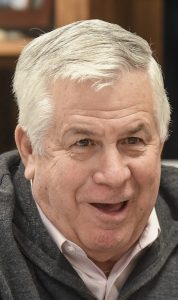
AHSAA Central Board President Terry Curtis said the legislature needs to consult with the association about the process of change, if needed. (Call News file photo)
“Some of those schools are pretty competitive in everything besides maybe football and there was no way for them not to count them,” AHSAA Central Board President and legendary former UMS-Wright coach Terry Curtis said of the ELL students. “A lot of people felt like if they were getting money for them from the state, then they ought to count.”
If House members had done their homework, they’d have seen this same basic proposal was overwhelmingly rejected by 73% of the AHSAA’s member schools. I am sure voters statewide feel the same way.
The good folks of Alabama usually pay no mind to the Legislature but if these lawmakers start tinkering with football — again, that is what this is all about — they’ll find a suddenly aroused electorate with knives out, ready to separate the politicians from their seats.
Nothing personal against Colvin but his argument that the workers at the chicken plants have caused this catastrophe in his town is a clucking ridiculous excuse given the fact that Albertville High lost far more than it won when it was in Class 5A (going 87-122 from 1992 to 2011). In its last two 0-10 seasons, Albertville High has been embarrassed by Class 5A teams, going 0-6 against Arab, Boaz and Guntersville. The closest was a 34-6 loss to Arab.
Albertville High would need 55% of its student body to be subtracted to reach Class 5A. Unfortunately, its ELL population is only 29%.
Instead of blaming immigrant students or crying foul on fowl, perhaps more attention should be paid to coaching and player development.
“You want to be fair but, at the same time, you’ve got to look at everybody,” Curtis said. “You can’t look at one little section. I’m sure Elberta has got the same problems with people coming in and working but they go ahead and you don’t really hear a whole lot about it. You play and you do it.”
Little would change
In Alabama, ELL students account for approximately 5.5% of the total student population. To grasp how this bill would not have significantly changed things, none of the top football schools in the state — for example, Auburn, Hoover, Thompson, MGM, Saraland and Jackson — would move anywhere even if the 5.5% state average was subtracted.
As you would expect, AHSAA Executive Director Heath Harmon opposes the bill for many reasons, the foremost of which is having policy dictated to it from outsiders. While the vast majority of its members are public schools that receive public funding, the AHSAA does not operate with taxpayer money.
Harmon is also correct in disliking other features of the bill, including separate criteria for classifying public and private schools and the duplicitous standard of not counting ELL students who decide to participate in sports. The bill would also put a non-voting member of the House and Senate on the AHSAA’s Central Board, which is idiotic. What’s the point of having non-voting board members?
If this bill ever becomes law, it will affect a handful of schools. The power schools will stay where they are and private schools don’t have enough ELL students to make a difference.
“It’s not going to change anything,” Curtis said. “You know, if somebody moves down, somebody’s got to move up. It was going to affect some 4As, 3As and a couple of 6As by the last classification count.”
A bad precedent
But the AHSAA itself, while on the right side of this argument, should also use this case to look at itself and build more moral high ground. While it is against a school gaining a competitive advantage due to this bill, why does it punish private schools with multipliers and competitive-balance rules that artificially inflate their enrollments and move them into classifications in which they have little chance to succeed?
This action by the House also sets a bad precedent that the state can tell any private organization what it can or cannot do. Aren’t conservative Republican politicians supposed to be against government overreach and don’t Democrats want to tell everybody how to live their lives? It seems those roles were reversed in this case; interestingly, all the Democrats in the Mobile delegation had enough sense to abstain.
Using this kind of lunacy, the Legislature could also mandate that 30% of students who write left-handed or 80% of students who don’t brush their teeth at least once a day should also be subtracted.
Governance of athletics is best left to the AHSAA, not the state. With Harmon in charge, I think the AHSAA is willing to fix problems if necessary.
One instance of government blowback against the AHSAA resolved itself nicely and should be the model on how to handle such matters. In February 2022, Ivey criticized the association for forcing Oakwood Academy’s boys basketball team to forfeit a playoff game because it was a Seventh Day Adventist school and wouldn’t play on a Saturday. The Legislature didn’t do anything and the AHSAA Central Board eventually adopted a new rule allowing schools to request rescheduling on religious grounds.
“The Legislature does a lot of good things but we just wish that when it came to high school athletics that they would come talk to us and let us explain to them the process,” Curtis said. “The member schools make the rules. They’re the ones that determine whether you do that or not, not the central board, not the executive director, not the past executive director. Everything’s not good for all the schools. It may be good for their little area.”
The governor and the Legislature can prod the AHSAA to make changes but the politicians had best stop there. Beyond that point, the lawmakers are out of their league and their minds.
What would it take?
Here is how much of the student population would have to be subtracted (or not counted) to drop this sample of football programs down a class, based on the most recent data by the AHSAA:
-
Auburn (7A to 6A), 51%
-
Hoover (7A to 6A), 51%.
-
Clay-Chalkville (6A to 5A), 45%.
-
Baker (7A to 6A), 40%.
-
Saraland (6A to 5A), 32%.
-
Thompson (7A to 6A), 32%.
-
Citronelle (5A to 4A), 32%.
-
Satsuma (4A to 3A), 27%.
-
Mary G. Montgomery (7A to 6A), 25%.
-
Alma Bryant (7A to 6A), 10%.


I enjoyed reading your opinion article. I would like to add one fact, employees of the AHSAA participate in the State of Alabama Retirement system and Health insurance system, which is funded by tax money. Now, my opinion, with tax dollars starting to go to private schools by the school choice legislation and most likely the legislature or the AHSAA allowing high school athletes to participate in NIL financing, we may see a movement toward two State Championship programs, one for private schools and one for public schools. By the way, The Collinsville Boys Soccer team won their state championship game yesterday and most of their players are ELL STUDENTS.